Health Screening
Incidental findings on a private scan
Written by Mr Stephen LingamReviewed by Dr Mohammad Bakhtiar (GMC 4694470) on
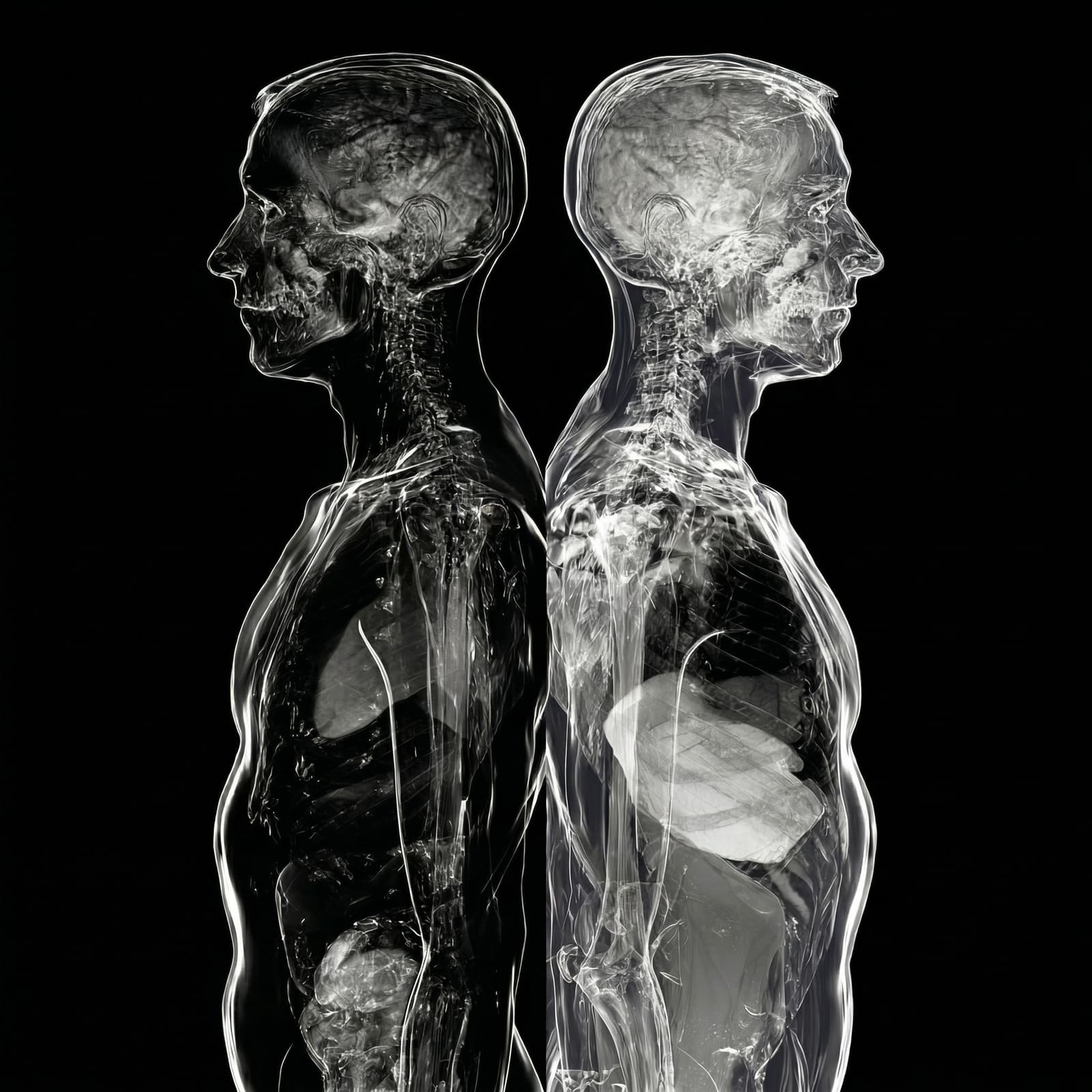
The report arrives, and halfway down the page there's a line you weren't expecting. A simple cyst on the liver. A small nodule in the lung. A kidney stone you never felt, or a thyroid nodule the size of a pea.
That's an incidental finding: something the scan shows that you didn't come in to look for. Most are harmless or simply part of getting older. What you need next is a doctor who already has your history, your bloods and the pictures, telling you whether it needs watching, a different test, or no action at all.
That's how our Ultimate Health MOT works at 117a Harley Street. A GP examination, over 70 blood markers and a consultant radiologist's report are read together in the same clinic and explained to you in person. If you'd like to talk it through first, call The Health Screening Clinic on 020 7183 7056.
Why do scans find things nobody was looking for?
People book wide imaging because they want fewer surprises, yet wide imaging is exactly how surprises arrive. More slices mean more chances to name something that would never have caused you trouble. Some of those things are well worth knowing about. Others start a run of extra scans, extra needles and extra weeks of waiting that ends with a benign result from the laboratory.
The professional bodies say this plainly. The Royal College of Radiologists recommends MRI to investigate symptoms under a doctor's direction. It warns that elective scanning of people without symptoms can lead to overdiagnosis of irregularities that turn out to be nothing, and to unnecessary treatment.
The UK National Screening Committee describes screening tests as simple rather than very accurate, and says they often need further tests to confirm or exclude disease. It recommends a population programme only when the whole plan, including those further tests, does more good than harm. Unselected whole-body MRI isn't on its list.
That's a professional caution, not a ban on doctor-led packages. It's also why Ultimate keeps the examination, the bloods and the radiologist's report together, instead of handing you a disc in a bag. For what the scan itself can and can't show, read our guide to full-body MRI. This page picks up the story when the report comes back with something on it.
What do common incidental findings look like?
Cysts
Cysts are common in the liver and kidney. Many are simple and thin-walled, and make no difference to how the organ works. The radiologist describes the features that make a cyst look simple, and complex features get a different description.
Your doctor then reads that description next to your liver blood tests and your history. A simple-looking cyst with ordinary blood results is often one to watch or leave alone. A cyst alongside abnormal liver numbers calls for a different conversation. Either way, it isn't a cancer diagnosis on the day of the scan.
Nodules
Nodules turn up in the lung, the thyroid and other solid organs. Their size, edges, calcification and whether they were on an older scan matter more than the word nodule itself. Most small lung nodules in people who have never had cancer are benign.
Some need a repeat scan at a set interval, because that's how a stable scar is told apart from a growing lesion. That further look can be exactly the right investigation, and it can also be a source of worry. At your review, ask what would change the plan, and when.
Wear in the spine
Spine MRI reports are full of everyday wear: disc dehydration, small disc protrusions and facet joint changes. These are common from midlife and match pain poorly. A report that lists them doesn't mean you need an operation, or that back pain you never had is about to start. Ultimate includes a whole-spine series, and a wide look at any adult spine finds some wear.
Other common extras
Other frequent findings include a missing or folded kidney, a uterine fibroid, an ovarian follicle, a sinus polyp, and small white-matter changes in the brain that track with blood pressure and age. Each can matter, and each can be nothing. Our FAQ sets out what happens after a finding: a clear explanation, and a referral letter if one is needed. You're never left to interpret the PDF alone.
How much imaging comes with each Health MOT?
Each of the four Health MOT tiers takes a different set of pictures, from no scan at all on Essential to the full MRI protocol on Ultimate.
| Tier | Imaging |
|---|---|
| Essential | No scan |
| Advanced | Chest X-ray, and DEXA when indicated |
| Elite | Ultrasound, and a mammogram from 40 |
| Ultimate | MRI protocol, in place of the X-ray and DEXA |
More pictures bring more incidental findings, so it's a trade-off worth weighing before you book. If you want the widest look and you're comfortable with the follow-up it can bring, Ultimate is built for that. If you'd rather not hear about findings that will only ever be watched, a narrower MOT may suit you better.
Blood tests have their own version of this. A raised marker, a slightly high liver enzyme or a vitamin just under the line is a statistical flag rather than a diagnosis. The same doctor reads both kinds of extra information together.
What should a good results review do?
A good review grades each finding: a simple cyst, a probably benign nodule, wear in keeping with age, or something that needs a defined further test. It says what that test would be, whether a repeat of the same picture, a different kind of scan, a specialist examination, or nothing at all. If your NHS GP is the right place for things to continue, your doctor writes to them.
Most findings go no further than that conversation. For the few that need a named specialty, we refer you to the consultants we work with. When that happens, screening is doing the part people forget to plan for: the time after the pictures.
A quiet report deserves the same careful reading. It describes those pictures, those sequences, on that day. Blood cancers, mucosal tumours and lesions smaller than a screening-style series can show sit outside what it can see. So keep up with your NHS breast, cervical and bowel screening, and get any new symptom checked, even after a clear MRI.
We've been at 117a Harley Street since 1984 and are registered with the CQC. That experience shapes how we explain a report, though no picture can ever be a guarantee.
Getting the most from your review
- Before you book wide imaging, think about what you'd want to do if the report names a cyst or a nodule.
- Bring previous scans as well as bloods. An unexpected liver lesion is often an old cyst once the last ultrasound is on the desk.
- Write down past operations, implants and any cysts you already know about, so the radiologist has the full picture.
- At the review, ask three things: what the finding is thought to be, whether anything needs to happen, and what would change that plan.
- Keep a copy of the report. If a further test is advised, agree who is following it up, the clinic or your GP, so it doesn't sit in an inbox.
- Give your doctor the chance to grade a finding before you search it online.
When you're ready, you can see everything Ultimate includes, and what the scan can't do, on the Ultimate Health MOT page, or call us on 020 7183 7056. If you're weighing up a scan on its own, read MRI-only versus a doctor-led MOT first.
Frequently asked questions
What is an incidental finding?
Something a scan shows that wasn't the reason for the scan. Cysts, small nodules and wear in the spinal discs are common examples, and naming one isn't the same as diagnosing anything.
Does an incidental finding mean I have cancer?
No. Most such findings are benign or age-related. Some need a further look and a minority need a specialist, and the doctor who has your history and bloods grades each one with you.
Is follow-up a sign that something is wrong?
Not necessarily. A repeat scan is how a nodule is shown to be stable, so further investigation is often simply the sensible plan rather than a diagnosis.
Does a clear MRI mean nothing was missed?
MRI shows structure in the areas scanned. It can miss disease that leaves no structural mark, and small lesions, so keep your NHS screening invitations and get any new symptom checked.
Why are clinicians cautious about whole-body MRI in people without symptoms?
The RCR advises MRI to investigate symptoms under a doctor, and warns that elective scanning can overdiagnose harmless irregularities. The UK NSC recommends programmes only when benefit outweighs harm, and unselected whole-body MRI isn't a national screening programme.
Which MOT finds the most incidental results?
The wider the imaging, the more findings. Ultimate's MRI protocol is the widest look and Essential has no scan, so choose your tier by the question you want answered.
I have a new symptom. Should I wait for the screening report?
No. See a GP or use urgent care now, and call 999 or go to A&E in an emergency. Screening is for people who feel well enough to be scanned.
Sources
- The Royal College of Radiologists. Statement on elective MRI health screening
- UK National Screening Committee. Principles of screening
- NHS. MRI scan
- The Health Screening Clinic. Full body MRI scans: what they can and cannot tell you
- General Medical Council. Medical register, Mohammad Bakhtiar, 4694470
Related screening

Stephen Lingam
Managing Director
Managing Director of Medical Express Clinic and the Health Screening Clinic since 1984. Over 40 years of operational experience in private healthcare on Harley Street, overseeing patient care, clinical standards, and service delivery.

Dr Mohammad Bakhtiar
MD, PhD, LRCP, MSc, DHMSA
Clinical Lead
GMC: 4694470
Leading our clinical team with a focus on comprehensive men's health and preventative oncology protocols.
Last reviewed: 25/09/2026