Health Screening
When private breast screening is useful between NHS mammogram invitations
Written by Mr Stephen LingamReviewed by Dr Hikmat Naoum (GMC 3047637) on
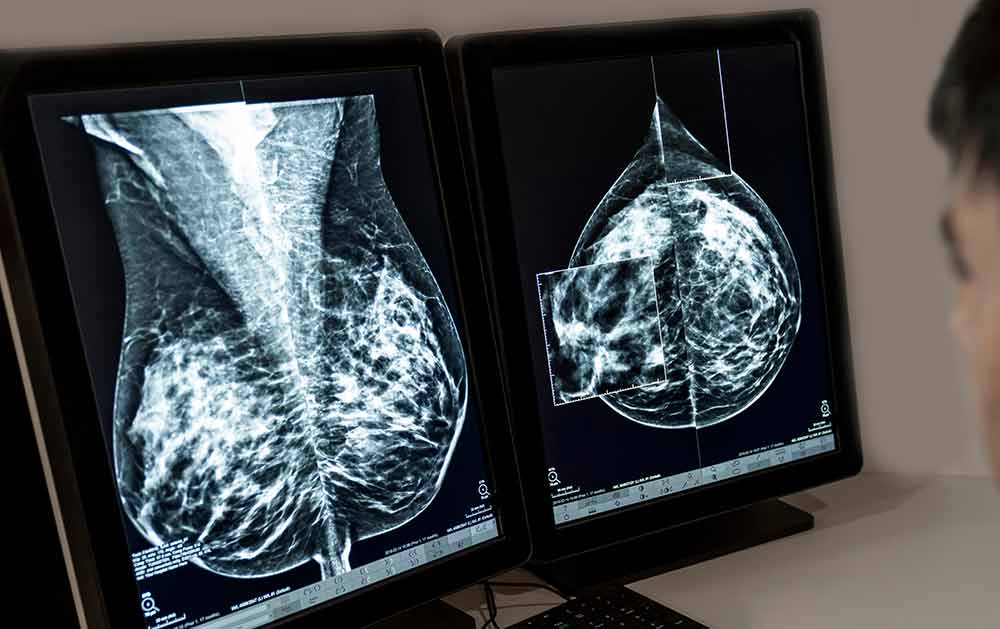
Your last mammogram was two years ago and the next letter still feels a long way off. Or you're in your forties and haven't been invited yet, or breast or ovarian cancer in the family has made three years between scans feel too long.
Private breast screening can fill that gap. We see women between NHS invitations, before they start and after they stop. Each visit brings a specialist breast examination, imaging chosen to suit your age and breast tissue, and a face-to-face review with a doctor.
If you already know what you'd like, you can book private breast screening at 117a Harley Street, London W1G 6AT, with no GP referral. Mammography from 40 is £449, breast ultrasound at any age is £799, and breast MRI with BRCA genetic testing is £1,599. The clinic has practised there since 1984 and is registered with the Care Quality Commission.
If you notice a lump, a skin or nipple change, or breast or armpit pain that won't settle, ask your GP for an urgent appointment, even if you had a mammogram recently.
How NHS breast screening works
NHS breast screening in England invites women aged 50 to 70 for a mammogram every 3 years. GOV.UK explains that this is because most breast cancers develop in women over 50, and that taking part is your choice. From 71 you can still ask for screening every 3 years, though you won't be invited automatically. The test itself is an X-ray of the breast, and most people need no further tests.
GOV.UK's leaflet puts numbers on it. Around 96 in every 100 people need no further tests and 4 are recalled, and of those 4, 1 is diagnosed with breast cancer. Very rarely a cancer is missed, and screening can also find a cancer that would never have caused harm. Mammography uses a small amount of X-ray radiation.
A clear result letter isn't a guarantee, because breast cancer can develop between appointments. That's the thing to remember about the three-year interval: it's designed for the whole population rather than promised to any one woman. Private screening leaves the NHS programme exactly as it is, and adds a check where your own gap feels too wide.
When is it worth screening between invitations?
Most women who come to us fit one of four situations: their age, the length of the interval, a family history, or dense breast tissue. Each points to a different package, so it helps to know which is yours.
Age is the simplest. If you're under 50, or 71 or over when automatic invitations stop, a private package gives you screening the national programme doesn't offer at that age. Under 40, we use ultrasound rather than mammography.
Family history is the one to take to your GP as well. NICE guidance on familial breast cancer groups people into near-population, moderate or high risk, so that NHS family-history and genetics services can offer more frequent mammography, and sometimes MRI. Moderate risk can mean a mammogram every year in your forties. High risk and known gene changes such as BRCA1, BRCA2 or TP53 bring closer surveillance. For some women that means the NHS Very High Risk programme, with MRI and mammography at ages set by national protocol. Your GP or a genetics service needs your full family tree to place you.
Dense breast tissue is the fourth. The NHS notes that it can make breast cancer more likely and mammograms harder to read, which is one reason ultrasound or MRI may be discussed.
Whichever applies, no screening test is perfect. The UK National Screening Committee describes screening as identifying apparently healthy people who may have a higher chance of a condition, then offering information, further tests or treatment. A false positive suggests a higher chance when the condition isn't there, and a false negative suggests a low chance when it is.
If you've also been meaning to book a smear or have a coil fitted, The Gynae Clinic is at the same Harley Street address.
Essential, Advanced and Elite breast packages
There are three doctor-led tiers. Each includes a consultation, a specialist clinical breast examination and an in-person review.
| Package | Price | What it uses |
|---|---|---|
| Essential breast screening | £449 | High-definition mammography for women aged 40 and over, with examination and review |
| Advanced breast screening | £799 | High-resolution breast ultrasound, suitable at any age |
| Elite breast screening | £1,599 | Breast MRI with BRCA genetic testing |
| Elite Health MOT for women | £2,095 | Gynaecologist consultation, trans-vaginal and pelvic ultrasound, a mammogram from 40, and a smear |
Essential, at £449, is high-definition mammography for women aged 40 and over, with the examination and review. Mammography looks for calcifications and structural change, and it's the natural choice between NHS invitations if a mammogram is what you want.
Advanced, at £799, is high-resolution breast ultrasound, suitable at any age. It's our recommended first-line imaging for women under 40, and where dense tissue makes the extra soft-tissue view useful. It gives a different picture from a mammogram and sits alongside the NHS programme.
Elite, at £1,599, combines breast MRI with BRCA genetic testing. MRI gives the highest-contrast look at breast tissue, at the ages the clinic accepts for that scan. BRCA testing looks at inherited lifetime risk rather than at the breast on a particular day. Elite is the tier for family history, density or a wish for MRI. Like the others, it comes with an examination and a review rather than a promise that cancer can be ruled in or out.
Most imaging results are ready within 3 to 5 working days. Genetic tests on Elite can take longer, up to around 10 days. You won't be left to read a report alone: if something is found, the doctor explains it and, where needed, arranges referral.
Would a well woman Health MOT suit you better?
If you'd like breast imaging as part of a whole-woman check, look at the Health MOT range. The Elite Health MOT for women costs £2,095 and runs on a Thursday or Friday specialist day lasting 2.5 to 3 hours. It includes a gynaecologist consultation, trans-vaginal and pelvic ultrasound, a mammogram from 40 and a smear. That comes on top of the Advanced MOT core of chest X-ray, DEXA when indicated, spirometry, VO2 max and four GP appointments across the year.
Before your appointment
- Work out whether your reason is age, interval, family history or density, because each points to a different tier.
- Bring previous mammogram letters, details of any implants and a list of your medicines.
- Tell us if you're pregnant or breastfeeding, under a breast consultant, or have had a mammogram in the last six months, as these change whether imaging should happen now.
- If the scan shows something, such as a cyst on ultrasound or a reason to recall you, the review is where it becomes a plan to watch, repeat or refer.
Keep your NHS invitations too. If the NHS asks you to attend an assessment clinic, go to that appointment as planned. To go ahead, book online or call 020 7183 7056, and see the consultants page if you'd like to know more about the wider clinical team.
For the wider women's check, read how a well woman Health MOT differs from a smear appointment. If breast cancer runs in your family, see family history and package choice.
Frequently asked questions
When is private breast screening useful between NHS invitations?
When you're in the three-year gap, not yet invited, or past automatic invitations, and you feel well. Family history and dense tissue can change which package suits you best. For a lump or a change you can see or feel, see your GP promptly.
I am under 50 and have not been invited. What then?
NHS invitations cover women aged 50 to 70. Under 40 we use ultrasound, and from 40 Essential mammography is available privately. If you have a family history, tell your GP as well, because NICE surveillance is offered through the NHS.
Does a recall or an odd finding mean I have cancer?
Usually not. GOV.UK notes that most people who need further tests don't have breast cancer. Equally, a normal mammogram isn't a guarantee, because cancers can be missed or develop later, and the doctor will explain what any finding means.
What is in Essential, Advanced and Elite?
Essential at £449 is mammography from 40, with examination and review. Advanced at £799 is breast ultrasound at any age. Elite at £1,599 is breast MRI with BRCA genetic testing. Results usually take 3 to 5 working days, longer for genetic tests.
How does the Elite Health MOT differ from Elite breast screening?
Elite breast screening focuses on the breast. The Elite Health MOT is a whole-woman screen that includes gynaecology, trans-vaginal ultrasound, a mammogram from 40 and a smear, on a specialist Thursday or Friday.
Should I still go to NHS breast screening if I pay privately?
Yes, unless a clinician has given you a specific reason not to. Private packages work alongside the national programme.
Sources
- NHS. Breast screening (mammogram)
- GOV.UK. Your guide to NHS breast screening
- NICE. Familial breast cancer (CG164)
- UK National Screening Committee. Principles of screening
- The Health Screening Clinic. Private breast screening
- General Medical Council. Medical register, Hikmat Naoum, 3047637
Related screening

Stephen Lingam
Managing Director
Managing Director of Medical Express Clinic and the Health Screening Clinic since 1984. Over 40 years of operational experience in private healthcare on Harley Street, overseeing patient care, clinical standards, and service delivery.

Dr Hikmat Naoum
FRCOG
Consultant Gynaecologist
GMC: 3047637
Expert consultant providing advanced gynaecological evaluations and imaging interpretation.
Last reviewed: 25/09/2026