Health Screening
When private prostate screening adds something beyond an NHS PSA conversation with a GP
Written by Mr Stephen LingamReviewed by Dr Mohammad Bakhtiar (GMC 4694470) on
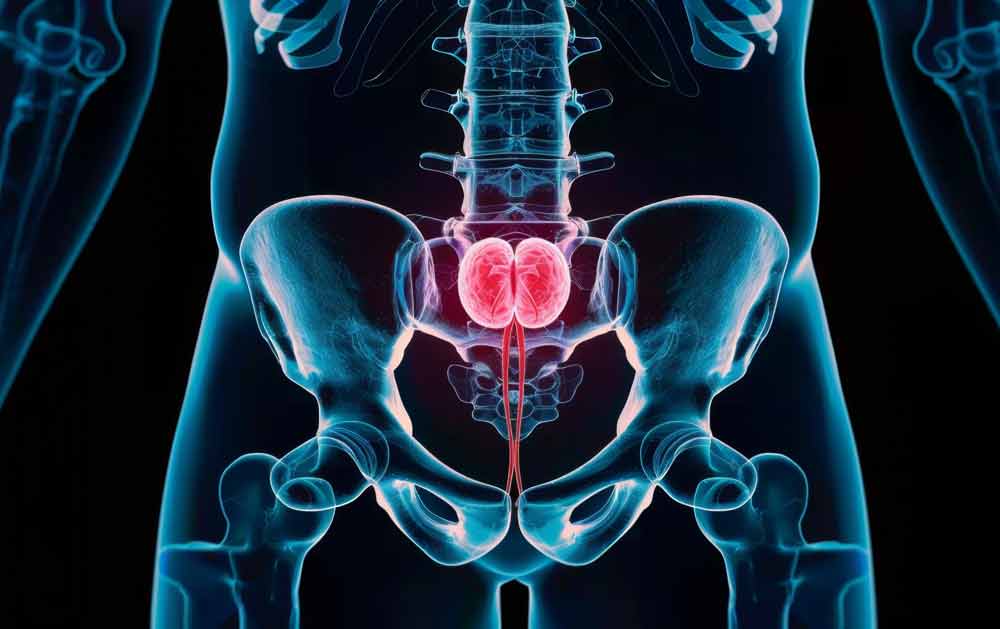
A birthday with a zero on the end, a friend's diagnosis, or a father or brother who had prostate cancer. Suddenly the prostate feels relevant, and you're wondering whether a chat with your GP about a PSA test is enough.
For many men that GP conversation is a sensible place to start. A private prostate screen adds what a single blood test can't: a doctor's examination, a broader laboratory profile or an MRI scan, and a face-to-face review of the results with the same clinic.
If you already know you'd like one, you can book private prostate screening at 117a Harley Street, London W1G 6AT, with no GP referral. Essential is £299, Advanced is £549 and Elite, with prostate MRI, is £1,299. The clinic has practised there since 1984 and is registered with the Care Quality Commission.
If you can't pass urine, have sudden severe testicular pain, see blood in your urine or have symptoms of a heart attack, call 999, go to A&E or get an urgent GP appointment. Any other change in passing urine is worth taking to your GP.
How PSA testing works on the NHS
There's no national invitation that calls every man in for prostate screening. NHS.uk explains that routine PSA testing isn't currently offered unless genetic tests have shown a faulty BRCA2 gene, which raises prostate cancer risk. You may be offered a PSA test if a doctor thinks you have symptoms that could be prostate cancer. Anyone with a prostate can still ask their GP for a test after talking through the benefits and risks, so it's an informed choice.
The UK National Screening Committee doesn't recommend screening the whole population. It has recommended targeted screening for men aged 45 to 61 with a confirmed BRCA2 variant, and NHS implementation is planned rather than already in every surgery. For most men, then, the NHS starting point is that GP conversation. A private package is a booked alternative: an examination, laboratory work or MRI depending on tier, and an in-person review.
What a PSA number can tell you
Prostate-specific antigen is a protein made by the prostate, and a PSA test measures how much is in your blood. A high level can be a sign of a prostate condition, which is a long way from a cancer diagnosis.
NHS guidance is open about the limits. A PSA result may not be accurate, and you may be offered tests and treatment you don't need. A high PSA can come from an enlarged prostate (benign prostate enlargement) or other non-cancer changes, and inflammation or a urine infection can lift it too.
That's why preparation matters. For 48 hours before the test, the NHS advises no anal sex, no ejaculation, nothing that leaves you out of breath, and no cycling, because each of these can raise PSA. If you've had a urine infection, wait 4 to 6 weeks after it has cleared.
Screening has a name for both kinds of error. The UK National Screening Committee calls it a false positive when a result suggests a higher chance of a condition that isn't there. A false negative suggests a low chance of one that is. A raised PSA with no cancer is the first. A reassuring PSA in a man who does have prostate cancer is the second. The first can bring worry, extra procedures and treatment, and the second can bring false reassurance.
If an NHS result comes back raised, you may be offered another PSA test, and your GP may then discuss specialist tests such as MRI or biopsy. That's the right next step for a result you already hold.
When a private package is worth it
A private prostate screen is worth considering when you want more than a single PSA discussed in a GP appointment. It's particularly worth thinking about if you're 50 or over, or from 45 if you're Black or have a close family history.
| Option | What it adds | Price |
|---|---|---|
| NHS PSA conversation | An informed choice with a GP, rather than a national invitation | Through your NHS GP |
| Essential prostate screening | Digital rectal examination, a PSA blood test, and an in-person review | £299 |
| Advanced prostate screening | A Prostate Profile in place of a standard PSA, with the examination and review | £549 |
| Elite prostate screening | Bi-parametric prostate MRI, with a multi-parametric upgrade when offered | £1,299, upgrade £400 |
| Elite Health MOT | PSA for men over 40, with abdominal, pelvic and testicular ultrasound | £1,850 |
Each tier finishes with an in-person review rather than a number posted to you without a conversation. The packages cover blood tests, examination and, at Elite, MRI. Genetic sequencing isn't a standard part of any of them.
Essential, Advanced and Elite prostate packages
Essential prostate screening, at £299, is a fundamental prostate health check: a physical examination including a digital rectal examination, a PSA blood test and the in-person review. It suits men who want a clinical baseline around their PSA. If a blood form on its own is all you need, there's a PSA blood test on our sister site.
Advanced prostate screening, at £549, replaces the standard PSA with an expanded Prostate Profile. That gives a more detailed view of prostate-specific antigens and markers than a single PSA figure, with the same examination and review. It's the one to choose when you want more laboratory information around the same consultation.
Elite prostate screening, at £1,299, adds bi-parametric prostate MRI. The scan looks at the gland in a way blood can't, and can show clinically significant cancers that blood tests alone may miss. A multi-parametric MRI upgrade is available for £400 when that scan is offered; it's optional, and it's a scan rather than a genetic test.
Most results are ready within 3 to 5 working days. You then come back so a doctor can explain them in plain English and, where needed, arrange referral into a specialist network.
Would the Elite Health MOT suit you better?
If you'd like the prostate checked as part of a whole-man screen, look at the Health MOT range. The Elite Health MOT costs £1,850 and includes PSA for men over 40 with abdominal, pelvic and testicular ultrasound. It lasts 2.5 to 3 hours and runs on any weekday, Monday to Friday. That comes on top of the Advanced MOT core of chest X-ray, DEXA when indicated, spirometry, VO2 max and four GP appointments across the year.
Before your test
- Keep the 48 hours before the blood test free of ejaculation, anal sex, breathless exercise and cycling.
- If you've had a urine infection, book once it has been clear for 4 to 6 weeks.
- Tell us if you've recently had a prostate examination, a catheter or another procedure around the gland.
- Bring previous PSA results, your family history and a list of your medicines.
- Pick the tier by your question: examination and PSA (Essential), a Prostate Profile (Advanced), or MRI (Elite).
To go ahead, see the packages on the private prostate screening page, book online or call 020 7183 7056. The consultants page introduces the wider clinical team.
For what a whole-person men's check covers, read what a well man check should include. For what a raised marker can and can't mean, see can a blood test detect cancer.
Frequently asked questions
When does private prostate screening add something beyond an NHS PSA conversation?
When you want a doctor-led examination, a Prostate Profile or prostate MRI, and an in-person review in one package. It works alongside the NHS conversation you can still have with your GP.
Does a raised PSA mean I have cancer?
Not necessarily. PSA is a protein from the prostate, and NHS guidance says a high PSA can come from an enlarged prostate or other non-cancer changes. Screening calls that a false positive, and the doctor will explain what your number means.
Can a normal PSA miss cancer?
Yes. No screening test is perfect, and a false negative is a result that looks reassuring when the condition is still there. That's why Essential includes an examination and Elite can add MRI.
What is in Essential, Advanced and Elite?
Essential at £299 is a digital rectal examination, PSA and a review. Advanced at £549 replaces the standard PSA with a Prostate Profile. Elite at £1,299 adds bi-parametric prostate MRI, with a multi-parametric upgrade at £400 when offered. Results usually take 3 to 5 working days.
How is the Elite Health MOT different from Elite prostate screening?
Elite prostate screening focuses on the prostate. The Elite Health MOT is a whole-man screen that includes PSA over 40 plus abdominal, pelvic and testicular ultrasound, and men's Elite is available Monday to Friday.
I already have a raised NHS PSA. Where should I start?
Take it to your GP. They may repeat the PSA and discuss specialist tests such as MRI or biopsy, which is the quickest way to get that result investigated.
Sources
- NHS. PSA test
- UK National Screening Committee. Principles of screening
- Cancer Research UK. Prostate specific antigen (PSA) testing
- General Medical Council. Medical register, Mohammad Bakhtiar, 4694470
Related screening

Stephen Lingam
Managing Director
Managing Director of Medical Express Clinic and the Health Screening Clinic since 1984. Over 40 years of operational experience in private healthcare on Harley Street, overseeing patient care, clinical standards, and service delivery.

Dr Mohammad Bakhtiar
MD, PhD, LRCP, MSc, DHMSA
Clinical Lead
GMC: 4694470
Leading our clinical team with a focus on comprehensive men's health and preventative oncology protocols.
Last reviewed: 25/09/2026